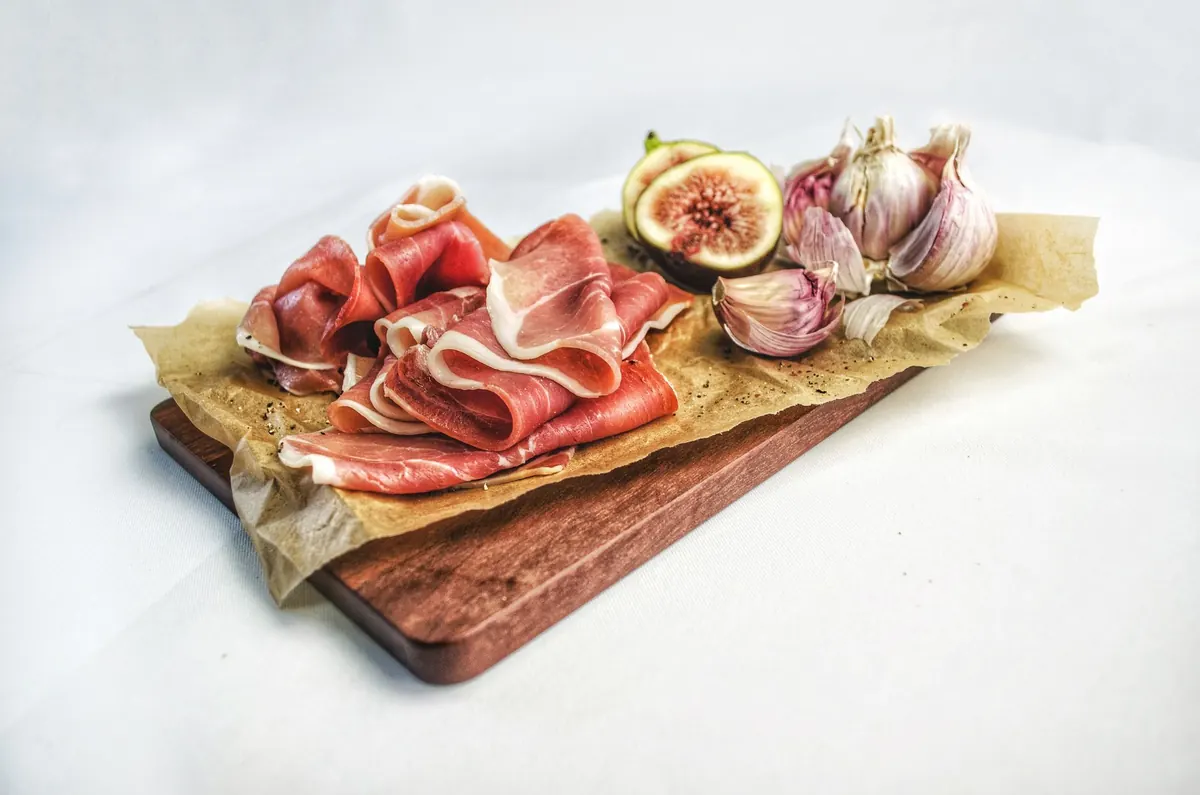
Figs and prosciutto turn up together on so many Italian tables that it is easy to forget how deliberate the match really is. A slice of cool, salt-cured ham against a fig split open at the end of September is not decoration. It is a small piece of engineering, balancing sugar, salt, fat and acid in every bite.
What follows is a working guide rather than a rulebook: the principle behind the pairing, how to choose the fig and the ham, which cheeses and herbs belong in between, and a handful of combinations to carry you from late summer into winter. None of it requires a special shop. It requires good ingredients and a little restraint.
The Pairing Principle: Salt, Sugar, Fat, Acid
Prosciutto is a preserved food and tastes like one: salt, slow-cured pork, a faint sweetness from the aging, and a texture that turns almost silky when it is sliced thin enough. A fig sits at the opposite end of the spectrum. Fresh figs are soft, floral and mildly sweet, with a jammy interior that spills out when you tear one open. Put the two together and each corrects the other. The salt stops the fig from turning cloying; the fruit stops the salt from turning harsh.
Everything else on the plate is a supporting act. Fat matters, because the marbled edge of a slice carries flavour and gives the bite length. Acid matters quietly: a squeeze of lemon, a few drops of good balsamic, or a glass of something dry alongside keeps a rich plate from feeling heavy. Texture matters most of all, and it is where most plates fail. Soft fig, soft cheese and paper-thin ham become a mush. Something has to crunch — a toasted piece of bread, a few grains of coarse salt, a toasted hazelnut, a shard of aged pecorino.
Fresh or Dried? The Fig Sets the Rules
Decide which fig you have before you think about the ham. The two behave very differently and want different partners.
Fresh figs
Fresh figs are in season from late summer into October, depending on where you are and which variety you find — Dottato, Brogiotto Bianco, Verdino, Kadota and Brown Turkey all have their moment. Choose one that bends slightly at the stem, shows a bead of syrup at the eye and gives under a thumb. Keep them out of the fridge; cold kills the perfume. Serve them at room temperature, torn rather than neatly sliced, with a pinch of salt.
Because fresh figs are delicate and high in water, they want a younger, milder prosciutto — 12 to 14 months, sliced thin and draped rather than layered. Soft dairy works here: ricotta, burrata, stracchino, a spoonful of crescenza. Mint and basil belong on this plate. Coarse black pepper and a thread of olive oil finish it. Eat the figs within a day or two of ripening; they do not wait.
Dried figs
Dried figs are a different ingredient entirely: concentrated sugar, a chewy bite and a flavour closer to caramel than to fruit. They can carry much more weight. Reach for prosciutto aged 18 to 24 months, for aged pecorino, gorgonzola dolce or taleggio, and for herbs with resin — rosemary and thyme rather than basil. Chestnut honey, toasted walnuts and a little orange zest all sit comfortably alongside.
The southern Italian tradition of stuffing dried figs with almonds and citrus peel exists for exactly this reason: the fig is sturdy enough to be treated almost like a confection. Fig jam or mostarda makes an even simpler route, spread thinly under a slice of ham on warm bread.
Choosing the Prosciutto (and When to Use Something Else)
Prosciutto di Parma tends to be dry, sweet and nutty, and it is the safest partner for both fresh and dried figs. San Daniele is softer, pinker and slightly sweeter, which suits a plate built around burrata. Culatello is more intense and deserves to be eaten sparingly, perhaps with dried figs alone. Speck, being smoked, wants dried fruit and something sharp — apple, pear, a little horseradish. Coppa or capocollo, with its pepper and marbling, works well against fresh figs and a bitter leaf such as radicchio.
Ask for it sliced paper-thin, and ask for it at the counter rather than buying a sealed pack. Let it sit at room temperature for fifteen or twenty minutes before serving, and separate the slices with baking parchment so they do not weld together.
Cheese: The Middle Layer
Soft and milky
Ricotta, burrata, stracchino, crescenza and robiola are there to soften the contrast, not to compete with it. Drain them well, season them with salt and pepper, and use them under the ham rather than beside it, so each forkful carries a little of everything.
Aged and sharp
Pecorino, parmigiano, gorgonzola dolce and taleggio bring salt, savour and bite to dried figs. Cut them thin or crumble them; large wedges overwhelm the fruit. Gorgonzola dolce with a dried fig and a slice of prosciutto on toasted bread is one of the few combinations here that needs nothing else at all.
Combinations Worth Trying
- Fresh fig, 12-month Parma, ricotta, mint. Tear the fig, spoon the ricotta, drape the ham, finish with torn mint and black pepper.
- Fresh fig, burrata, San Daniele, basil oil. Split the burrata at the table, add two figs per person, and let the ham fall over the top.
- Dried fig, aged pecorino, 24-month prosciutto, chestnut honey. Cut the fig in half, tuck in a sliver of cheese, wrap with ham, and drizzle at the last second.
- Dried fig, gorgonzola dolce, rosemary, toasted walnut. Serve on warm focaccia, with the cheese at room temperature so it spreads.
- Fresh fig, coppa, radicchio, balsamic. A leaf, a slice of fig, a fold of coppa, a drop of balsamic. Good as a starter with bread.
- Fig jam, prosciutto, parmigiano, cracked pepper. The winter version, assembled in seconds on grilled bread.
Follow the calendar rather than the recipe: fresh figs with the young ham and the milky cheeses from August to October, dried figs with the older ham and the sharp cheeses from November onward. Spring and early summer have no fresh figs worth arguing about, which is when jam earns its place.
Assembly, Timing and What to Drink
Assemble these plates at the last moment and keep them out of the fridge. Prosciutto dulls in the cold, figs go slack, and cheese loses its perfume. Set everything out twenty minutes ahead, slice the bread thick, and season at the end — the ham is already salty, so add pepper before you add salt.
On the drinks side, keep it simple and dry. Prosecco, a light Lambrusco or a young Sangiovese all handle salt and fruit without fighting either. A dry white with decent acidity works with the fresh-fig plates, while dried figs and aged cheese can take a glass of something slightly sweeter, such as a Vin Santo, in small measure.
Two final notes from the kitchen. If you are serving a crowd, build small portions on bread or crostini rather than a large platter — the pieces hold together better and the plate stays tidy. And if you end up with more figs than guests, halve them, warm them in a pan with a spoonful of honey and a sprig of rosemary for a few minutes, and serve them with the leftover cheese. Salt and pepper first, then the prosciutto on top. It is the same idea, just rearranged.
Photo: Nicolas Postiglioni / Pexels