A coastal lunch doesn't need a menu. It needs a board, something cold to drink, and the willingness to let people pick at their food for an hour before anyone thinks about the next course. Antipasto, in this setting, is less a recipe than a way of arranging things: cured meat, cheese, olives, a little seafood, figs at their ripest, bread that shatters when you break it. The aim is contrast — salt against sweetness, fat against acid, soft against crunchy — and enough abundance that nobody feels they have to be polite about portions. Here is how to build one that looks generous and, more importantly, eats well.
Start With the Board, Not the Shopping List
Most antipasto boards fail because the board is too small. You want something larger than feels reasonable: roughly 45 to 60 centimetres across for four to six people, so the food can spread out and breathe. Crowded boards look mean, and they make it hard to pick anything up without knocking over a stack of salame. Empty space is not wasted space.
Wood is the classic choice and it looks warm against the food, but on a hot afternoon near the water, marble, slate or a large ceramic platter stays cooler and wipes clean more easily. If you're serving outside, that matters more than you'd think.
Before you place a single olive, put down three or four small bowls off-centre, like anchors. One for olives, one for seafood, one for something spoonable such as ricotta or honey, and one for the pits. Odd numbers look more natural than even ones. Once the bowls are set, you have a rhythm to work around, and the rest of the board arranges itself: meat in loose folds here, cheese cut into wedges there, figs filling the gaps.
Cured Meats: Three Is Enough
Three kinds of cured meat is plenty. More than that and the board starts to look like a deli counter rather than a lunch. Aim for one delicate and sweet, one coarse and spicy, and one soft or lean for contrast.
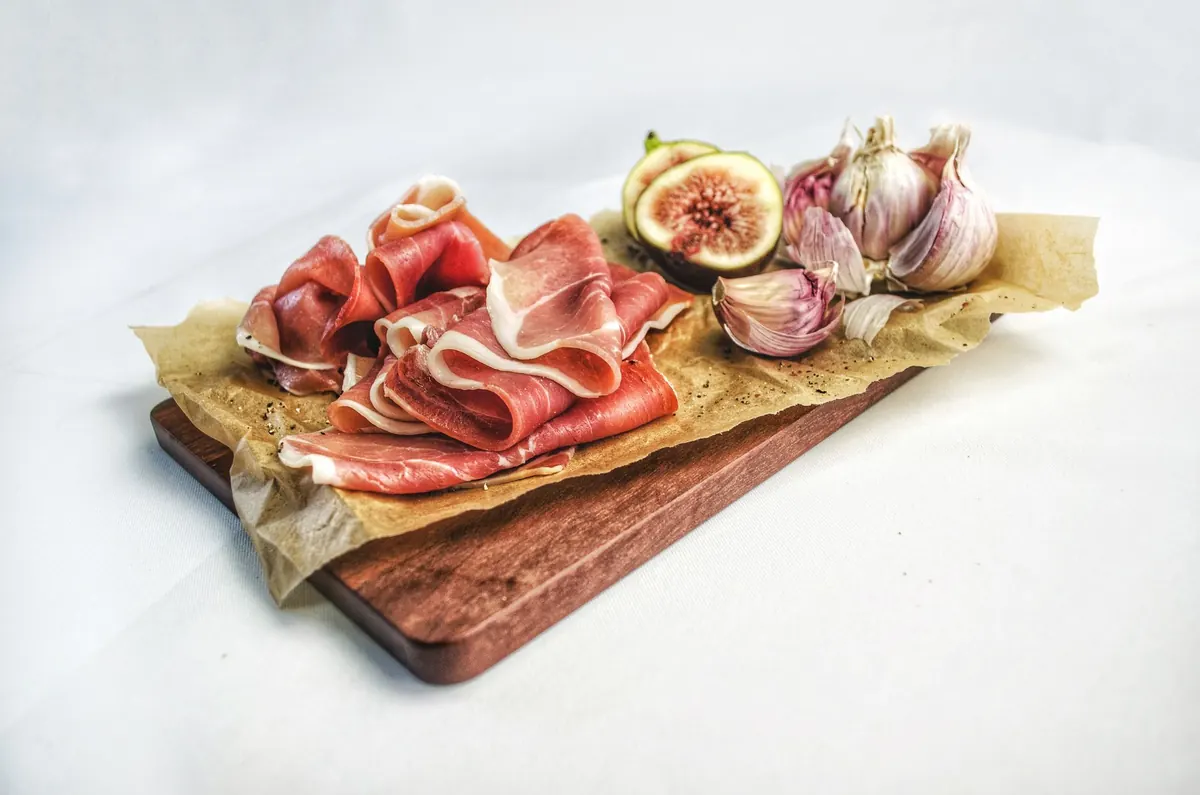
Prosciutto crudo — Parma or San Daniele — is the obvious opener, and it earns its place. Add a coarse soppressata or a peppery coppa for heat, and a soft mortadella or a few slices of lean bresaola to round things out. Ask for the meat sliced thin, to order, and use it within a couple of days.
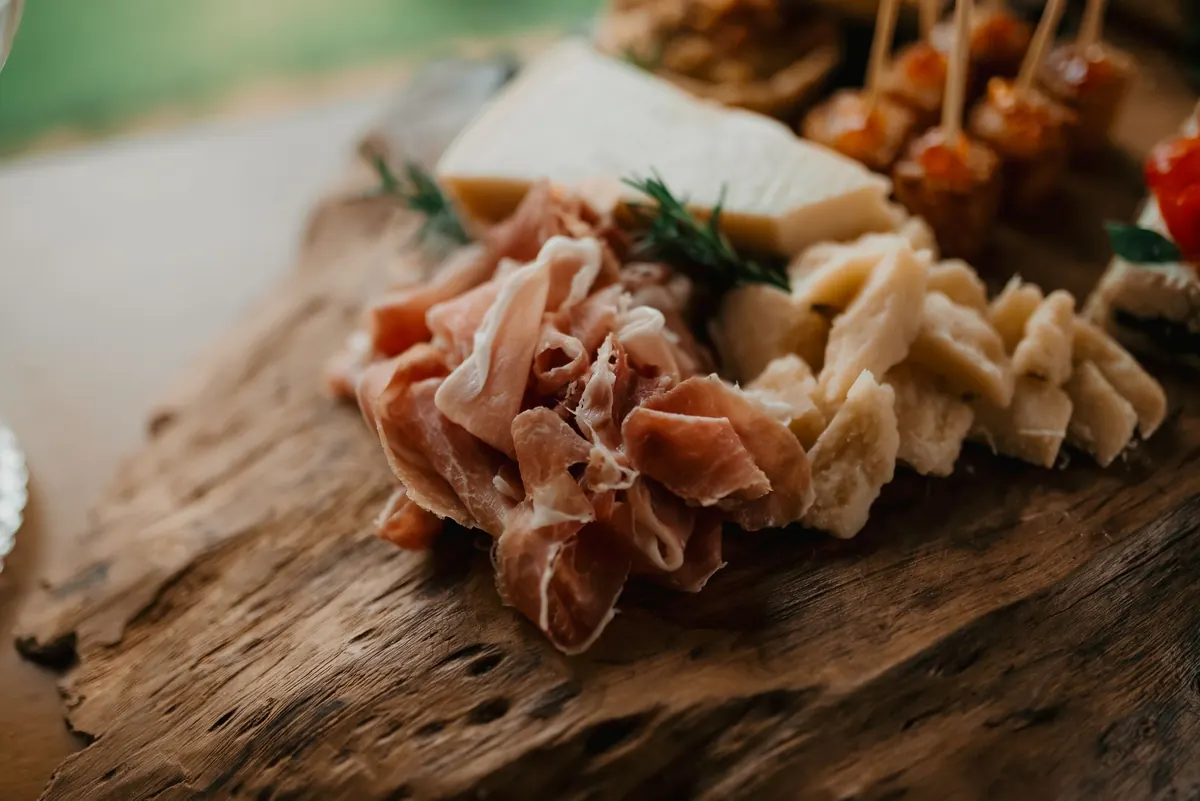
The arrangement matters as much as the selection. Don't lay slices flat like cards. Drape them, fold them into loose ribbons, let them sit in soft mounds so people can take a slice without dragging the whole pile with it. Take the meat out of the fridge fifteen or twenty minutes before serving; cold fat tastes of nothing.
Cheeses That Can Sit Out
Two or three cheeses with distinct personalities: something young and milky, something aged and salty, and something soft enough to spread. A young pecorino, a provolone or caciocavallo, a wedge of Parmigiano with a small pool of honey poured over it, or a drained ball of mozzarella torn into pieces just before serving.
Cut them in different shapes so the board doesn't read as a grid — wedges, rough chunks, thin shingles. Leave the rind on; it looks better and keeps the cheese from drying out. Take them out of the fridge half an hour ahead, and keep soft cheeses in the shade rather than in direct sun.
Olives, and a Little Something From the Sea
Two kinds of olives, one small and firm, one large and buttery — Taggiasca or Gaeta alongside Cerignola or Nocellara. Drain them well, then dress them with good olive oil, a strip of orange peel and a pinch of fennel seed. That two-minute step makes supermarket olives taste like they came from a deli.
Seafood is what turns this from a party platter into a coastal lunch, but restraint helps. One or two items is enough:
- Alici marinate — anchovies cured in lemon juice, dressed with oil and parsley, served very cold.
- Gamberi lessati — boiled prawns, peeled, with lemon and coarse salt.
- Tonno sott'olio — good-quality tuna in oil, broken into chunks rather than flaked.
- Polpo — sliced octopus, dressed with oil, lemon and celery.
Buy these from a fishmonger or a good delicatessen rather than trying to do everything yourself on the day. Keep them in a bowl set over ice or bring them out in small batches. On a warm afternoon, seafood shouldn't sit in the sun for more than a short while; if the board is outside, keep the bowl shaded and replenish from the fridge. This is not the place to be casual about temperature.
Figs, and the Sweet-Savoury Bridge
Fresh figs, halved and torn open, are the most elegant thing on the board and cost you almost nothing in effort. Wrap a few halves in prosciutto, leave the rest bare. Add a small bowl of honey, a spoonful of mostarda, or a few tablespoons of fig or quince preserve to bridge the cheese and the fruit. Cracked pepper and flaky salt over the figs sharpens everything.
Outside fig season — late summer into early autumn — use peaches, melon wedges, or a bunch of grapes. Something juicy and sweet is doing real work here: it cuts through the fat of the salame and the salt of the pecorino.
Bread, and the Crunch Factor
Bread is not a side note. A board without crunch feels heavy after the third bite. Thick slices of pane cafone or ciabatta, grilled and rubbed with garlic, drizzled with oil at the last minute. Focaccia cut into squares. Taralli and grissini standing in a glass or a small jar, so people can reach them without dismantling the board.
Keep bread in a basket or cloth-lined bowl rather than on the board itself, and put it out in two or three rounds rather than all at once. Bread that sits out in the open air for an hour loses the crust you went to the trouble of toasting.
The Order of Assembly
- Set the bowls. Place three or four small bowls off-centre for olives, seafood, honey or ricotta, and pits.
- Anchor with the big pieces. Cheese wedges and folded meat mounds go next, spread apart with space between them.
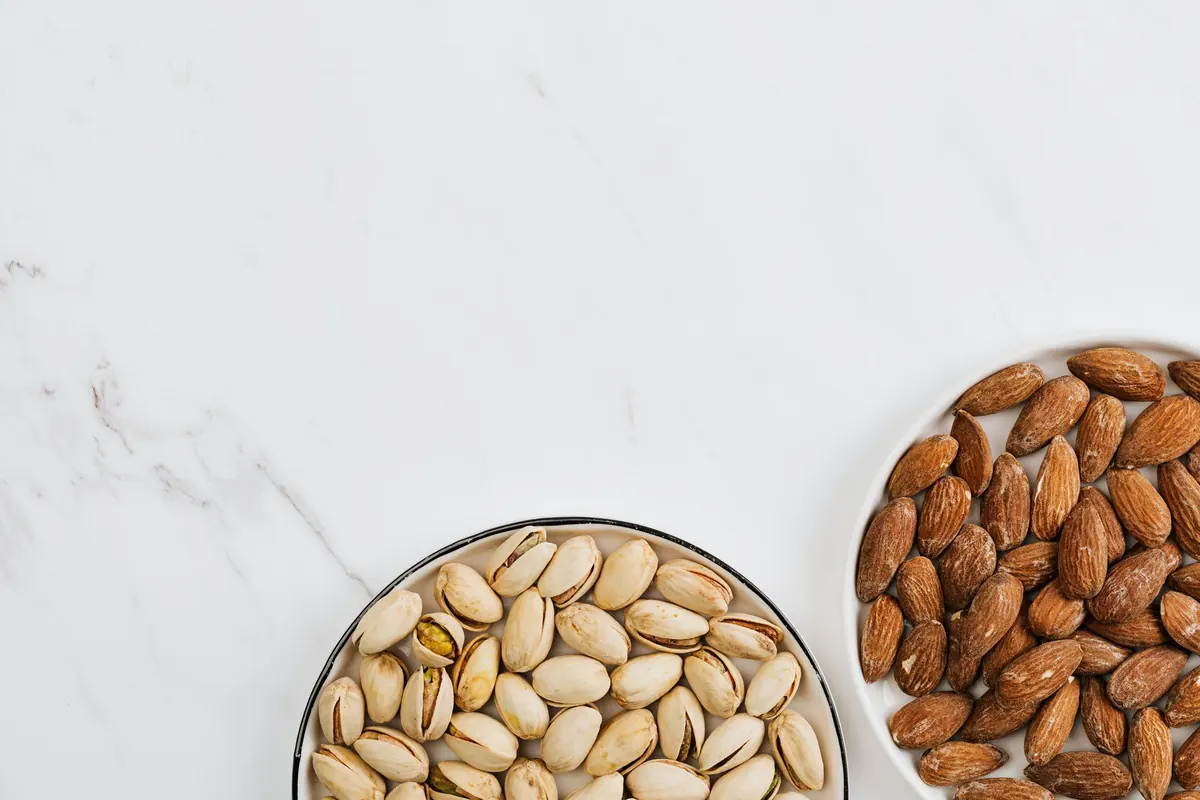
- Fill the gaps. Figs, fruit, taralli, a handful of nuts. Work outward from the bowls.
- Add the wet things last. Seafood, soft cheese and anything oily go in just before serving.
- Finish with oil, salt and zest. A drizzle of olive oil over the cheese, flaky salt on the figs, lemon zest over the prawns, a few torn basil or mint leaves.
- Stand back and check the colours. If it looks beige, add something green, red or dark purple.
Serving It Outside, and What to Do With the Leftovers
Put the board in shade, not in full sun, and set out small plates and a bowl for olive pits and seafood shells. A roll of paper napkins and a couple of serving forks will do more for the mood than any extra ingredient. Then leave people alone with it.
Leftovers keep well enough for the next day. Chop the meats and cheeses into a pasta salad with tomatoes and oil, fold them into a frittata, or layer the cured meat and cheese into a sandwich with the last of the figs. Torn bread becomes panzanella. Nothing on this board needs to be thrown away, which is one more reason to build it a little bigger than you think you need.
Photo: Jonathan Borba / Pexels