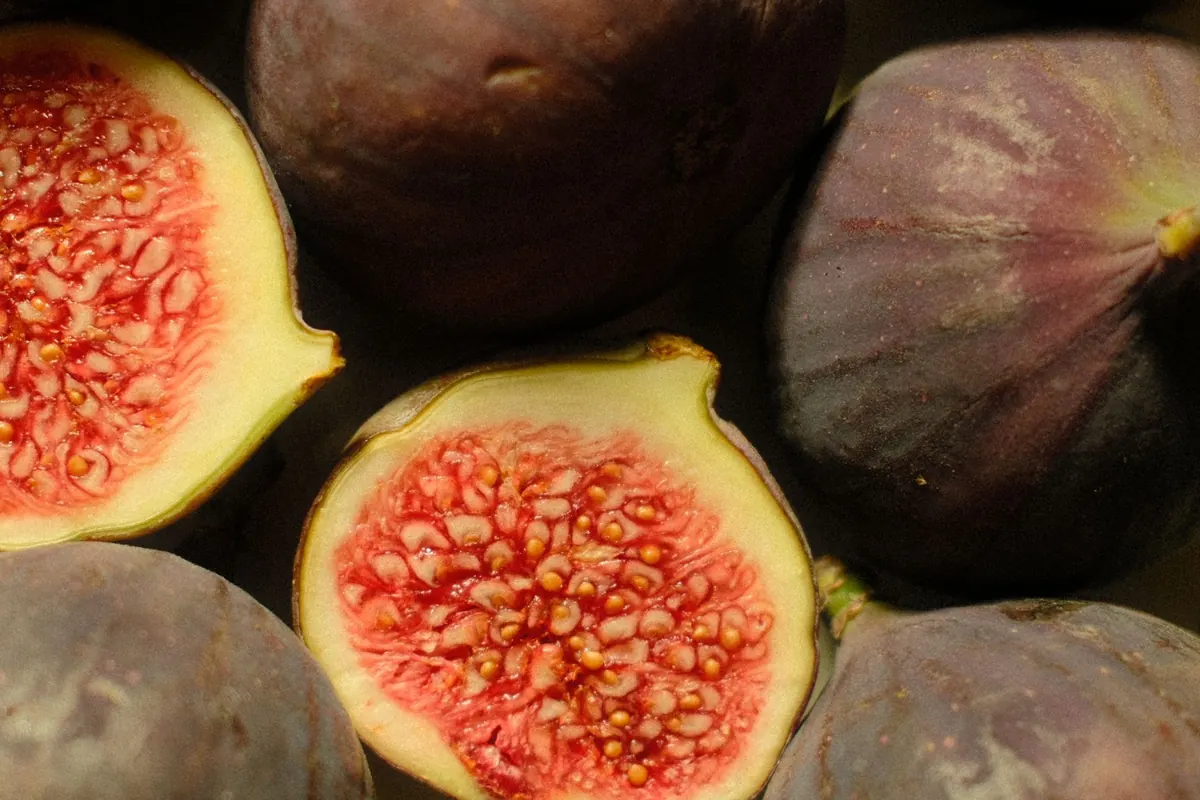
The fig stall at an Italian market is a small test of character. The fruit is delicate, it bruises if you look at it too long, and the difference between a fig that tastes of honey and one that tastes of damp cardboard was decided on the tree, not on your kitchen counter. Figs do not ripen after picking. They soften, and eventually they spoil, but the sugar is fixed the day they come off the branch.
That makes the buying the whole game. You cannot rescue a pale, firm fig by leaving it in a bowl for three days, and you cannot save an overripe one with the fridge. What you can do is learn to read the fruit in about fifteen seconds, standing at the stall, before you hand over your money. Here is what to look at, and in what order.
1. Start With the Stem
Pick up a fig and turn it so the stalk faces you. That small stem is the first honest piece of information you get. On a fig picked within the last day or so, it is still pale green, slightly pliable, often marked with a trace of dried sap. On a fig that has been sitting in a crate since last week, it is brown, shrunken and stiff — it looks like a piece of wire.
A caution in the other direction: if the cut end is still beading white latex, the fig was picked very recently but may not have been ready. That milky sap is the plant's defense, and a bead of it is a reliable sign of an underripe fruit. It is also sticky and can irritate skin and eyes, so wipe your fingers on a cloth rather than your trousers, and keep it away from children's hands.
Then check how the stem sits in the fruit. It should feel firm at the shoulder, not loose. If it wobbles, or pulls away with almost no resistance, the fig is past its best — the skin around the base will usually look sunken and slightly wrinkled in a way that reads as tired rather than ripe.
2. Read the Skin, Not Just the Color
A ripe fig wears a fine, dusty haze — the bloom that develops on the skin and rubs off at the first touch. That matte finish is what you want. A glossy, polished, almost shiny fig has either been handled by everyone at the market before you or was picked too firm and has been sitting around looking decorative.
The skin itself should be thin, intact and taut without being tight, and on a good fig you can almost sense the pulp pressing out from underneath. Small, fine wrinkles near the stem are normal and often a sign of ripeness. Dark watery patches, white or gray fuzz around the opening, or any hint of collapse are not.
Color is a variety question, not a ripeness question
This is the mistake most people make. Green figs stay green when they are perfectly ripe; dark figs go from purple to near-black. Shopping by color alone means passing over excellent fruit and picking up unripe fruit that happens to be the right shade. Learn what the variety in front of you is supposed to look like at its best, then judge the surface, not the hue.
3. Weigh It in Your Palm
Heft a fig before you squeeze it. Good figs feel heavy for their size, dense with juice and seeds. A fig that feels light and slightly hollow is drying out, and no amount of care at home will bring it back.
Then use the gentlest possible test: press the base of the fig between thumb and finger. It should give the way a ripe peach gives — a soft resistance, not a collapse. Mushy means overripe and probably already fermenting inside. Hard means it will never improve, because there is nothing left for it to do.
At a busy stall, be considerate. Handle only the figs you intend to buy, and if the vendor has arranged them in a single layer, lift from the edge rather than digging through the middle. Most vendors will hand you a fig to feel if you ask; nobody minds a careful customer, and everybody minds a flattened tray.
4. Smell the Stem End
Bring the fig close to your nose, at the wide end opposite the stem. Ripe fruit smells sweet and jammy, somewhere between honey and melon, with a faint green note underneath. The aroma should be obvious enough that you notice it without hunting for it.
Nothing at all means underripe. A sour, winey or vinegar smell means the sugars have started to turn — put it down and move on, even if it looks flawless. In a big pile where every fig reads more or less the same to the eye, your nose is the fastest filter you have.
5. Understand the Slight Split
Many excellent figs split a little at the eye, or tear slightly at the stem, as they swell in the final days of ripening. The skin simply cannot keep up with the pulp. A small, clean split is often a good sign, not a flaw.
What matters is whether the split is dry or wet. Dry edges and an intact shape: buy it and eat it soon, because it will not keep. Weeping syrup, darkened and softening edges, a drop of liquid collecting at the opening, or a single fruit fly hovering nearby: that fig is over the hill and will taste tired and alcoholic. The same goes for a split that has started to grow fuzz.
And remember the opposite case: a fig with no split at all, a firm body and white latex at the stem is simply not ready. Slight splitting, in other words, is a detail to interpret rather than a rule to follow.
6. Know What You Are Buying
In Italy, figs mostly arrive in two waves. The early crop — the fioroni — comes at the start of summer, often larger and coarser. The main crop, the forniti, follows from late summer into autumn and is generally sweeter and finer. Asking a vendor which crop you are looking at is a quick way to know what to expect from the tray.
Variety matters just as much, because each one ripens to a different color and shape:
- Dottato — pale green to yellow, honeyed and soft; the classic fig of the south, good for eating fresh and for drying.
- Brogiotto Nero — deep purple-black, rich and jammy, with a thin skin that marks easily.
- Verdino — green with a violet blush, delicate and sweet, best eaten within a day.
- Kadota — reliably green when ripe, thicker-skinned and a little firmer, which makes it the most forgiving to transport.
- Brown Turkey — large, copper-purple, milder in flavor and widely grown for good reason.
One seasonal note worth remembering: after heavy rain, figs take on water, split and sour quickly. If it rained yesterday, inspect the tray more carefully than usual.
The Seven-Point Checklist to Take to the Market
Run through this in order and you will rarely bring home a bad fig:
- Stem pale green and pliable, not brown and brittle.
- No bead of white latex at the cut end.
- Skin matte with bloom, not glossy or polished.
- No bruising, watery patches or fuzz at the eye.
- Heavy for its size, with a gentle give when pressed.
- Sweet, jammy aroma at the wide end.
- Any split is dry and clean, with no weeping or sour smell.
Once home, keep figs in a single layer in a cool spot and eat them within a day or two; the fridge buys you time but dulls the flavor, so bring them back to room temperature before serving. Rinse only just before eating, since water on the skin speeds up spoilage. And buy fewer than you think you need — six perfect figs are worth more than a whole tray of mediocre ones.
Photo: Alyona Nagel / Pexels